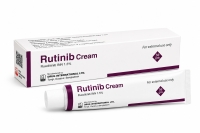
Rutinib Cream: ruxolitinib 1.5% review, uses and history of this therapy class
Rutinib Cream (RUXOLITINIB 1.5%) is a topical form of a medicine containing the active substance ruxolitinib. Ruxolitinib belongs to Janus kinase inhibitors, or JAK inhibitors. This class of medicines affects intracellular signaling pathways through which immune cells transmit inflammatory signals. In dermatology, this approach is interesting because inflammation can be targeted locally, directly in the affected skin area.
What is Rutinib Cream?
Rutinib Cream is a ruxolitinib 1.5% cream for external use. In terms of its pharmacological idea, it is related to the same treatment concept as Opzelura, the original ruxolitinib cream 1.5%, known as the first topical JAK inhibitor approved by the FDA for several dermatological indications. Rutinib is considered by some patients as an accessible option when a doctor has recommended ruxolitinib specifically in cream form.
It is important to emphasize that Rutinib Cream is not a cosmetic product and should not be used simply as “skin care” without a diagnosis. It is a prescription dermatological medicine. Before ordering, the trade name, 1.5% concentration, tube volume, manufacturer and prescribed treatment schedule should be checked with the treating physician.
What is ruxolitinib cream used for?
Topical ruxolitinib has been studied and used internationally for skin diseases in which inflammatory cytokine signaling and the JAK-STAT pathway play an important role. The best-known areas are atopic dermatitis and non-segmental vitiligo. In atopic dermatitis, a doctor evaluates itching, redness, irritation and the affected skin area. In vitiligo, repigmentation dynamics, regular use and long-term follow-up are important.
- Mild to moderate atopic dermatitis when other prescription topical therapies are not suitable enough or do not adequately control symptoms.
- Non-segmental vitiligo in adults and adolescents, as prescribed by a specialist.
- Situations where a physician needs to target the inflammatory mechanism locally rather than use systemic therapy.
The history of ruxolitinib cream
The history of ruxolitinib did not begin with a cream. Ruxolitinib first became known as a systemic JAK1/JAK2 inhibitor in hematology. Later, researchers began developing a topical form in order to use the JAK-inhibition mechanism in the skin and reduce systemic exposure. This transition from oral systemic therapy to a local dermatological form became an important technological step.
In 2021, the FDA approved Opzelura (ruxolitinib cream 1.5%) for topical short-term and non-continuous chronic treatment of mild to moderate atopic dermatitis in non-immunocompromised patients aged 12 years and older, when the disease is not adequately controlled with other prescription topical therapies or when those therapies are not advisable. In 2022, ruxolitinib cream received FDA approval for non-segmental vitiligo in adults and adolescents aged 12 years and older. For dermatology, this was a notable event: a home topical therapy aimed at repigmentation in vitiligo became available.
Why this is considered a progressive direction
The main idea of the JAK approach is not simply to soften the skin or temporarily hide symptoms, but to interfere with the chain of inflammatory signals. The cream form makes this approach more targeted: the active substance is applied to affected areas, while the physician can control the application area and duration of the course. For patients, this may be more convenient than frequent procedures or systemic therapy, but convenience does not remove medical restrictions.
The progressive nature of ruxolitinib cream is also connected with the fact that it expanded treatment choices in conditions where patients had long had few convenient options. In vitiligo, for example, before topical JAK therapy, patients often had to rely on phototherapy and long monitoring schedules. A JAK inhibitor in cream form became a new option that a doctor may consider based on age, affected area, comorbidities and risks.
Safety and limitations
Ruxolitinib cream should not be considered universal or completely safe for everyone. It should not be used in case of intolerance to its components. Caution is required with infections, weakened immunity, a history of cancer, cardiovascular risks, thrombosis, pregnancy and breastfeeding. It should not be combined with systemic JAK inhibitors, biologic therapy or strong immunosuppressants without medical supervision.
Patients should pay attention to worsening irritation, signs of infection, a painful rash, fever, shortness of breath, chest pain, unusual bleeding or a marked deterioration in well-being. In such cases, medical advice is necessary.
Rutinib Cream in the U-HIV catalog
The U-HIV catalog includes a product card for Rutinib Cream (RUXOLITINIB 1.5%). Before ordering, make sure the medicine has been prescribed by a doctor and that the dosage form and concentration match the prescription. The information in this article is for reference only and does not replace consultation with a dermatologist.